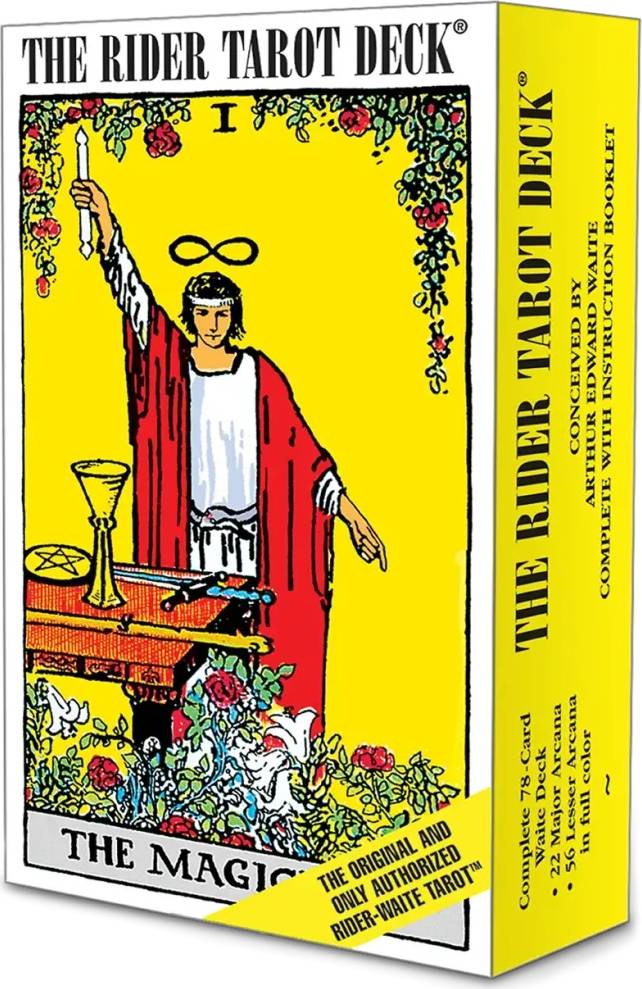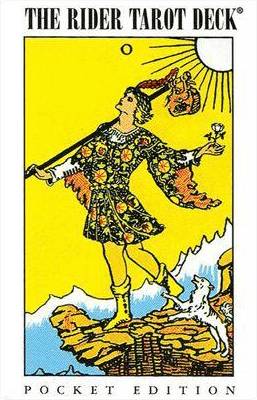
Pocket Rider-Waite Tarot
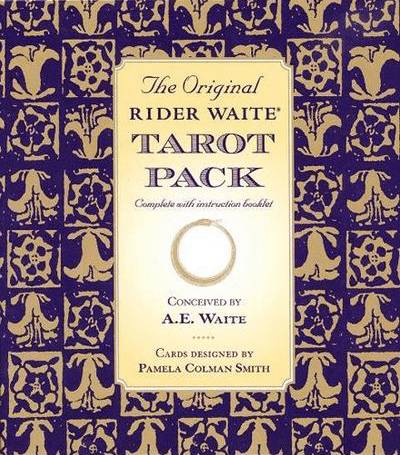
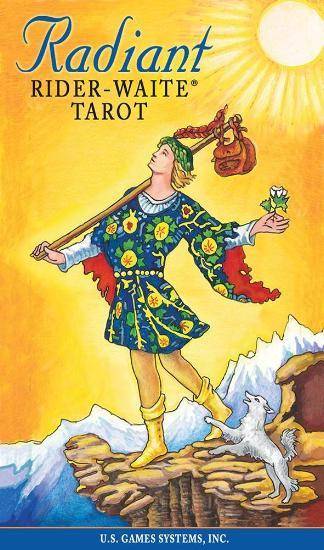
The Rider-Waite deck set the template for modern tarot in 1909, and it has never gone out of favor. Pamela Colman Smith’s drawings, made under Arthur Edward Waite’s direction, gave every card of the Major and Minor Arcana a fully realized pictorial scene, making the symbolism readable and intuitive in a way that no deck before it had achieved. This pocket format brings all of that into a compact size, complete with an instruction booklet that covers upright and reversed meanings, keywords, and an introduction by Stuart R. Kaplan. Aeclectic Tarot named it one of the Top Ten Tarot Decks of All Time.
Sobre los Creadores
Pamela Colman Smith was born in London and spent her early life moving between Europe and North America as her father’s work required. After her mother’s death when she was ten, she was taken in by friends who worked in the theater. In 1893 she moved to Brooklyn and enrolled at the Pratt Institute, studying art under Arthur Wesley Dow. She returned to England after graduating and built a career as an illustrator and theatrical designer. In 1909, Arthur Edward Waite commissioned her to illustrate his tarot deck, paying her a flat fee. Waite selected her for the work because of her artistic talent, their shared membership in the Golden Dawn, and his belief that her intuitive gifts would help her convey deeper symbolic meaning. Her name was omitted from the original deck in favor of the publisher’s, an injustice the tarot community has increasingly worked to correct by referring to the deck by the name Rider-Waite-Smith. She died in Bude, Cornwall, on September 18, 1951.
¿Qué tienen las cartas reservado para ti?
Descubre nuestras lecturas de tarotMazos Similares